A fundamental[1] tenet of agile programming is DRY, “don’t repeat yourself”. In online photo punditry, of which this is a lame example, no such maxim exists; in the interests of increased page rank and -views, people all over the place repeat the same tired platitudes that have been common wisdom since at least, oh, 2003.
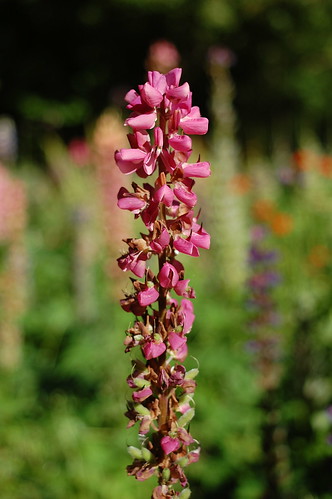
I too dreamed of making my infinitesimal mark upon the face of the online world, earning applause from that tight-knit circle of mutual admiration that shall remain nameless (remember, there is no conspiracy). But the days flew by and I did not plonk my ass down to decry the current cult of wide-open, wide-to-normal angle portraiture, which implies a fast lens and also pleasant “bokeh”[2].
The demand arises, if an online whining can be dignified by the term, when you use such a lens to take a portrait, instead of a medium-to-long tele as God intended you to do.
As you’re a lazy kind of guy, you invariably get a ton of background in your shot, which can be distracting. And instead of drawing the obvious conclusion and either changing your lens or Heavens forbid changing your composition, you want — nay demand — your expensive superfast lens to have good bokeh.
Note that good bokeh and a well-corrected lens wide-open seldom mix. This is a fact of optics, of which I know very little, but in my role as pundit this does not matter.
But I don’t have to develop this theme, complete with veiled barbs against the current status quo and implied superiority of my own position, because the estimable Dante Stella already did this long ago. So read what he has written, and repent. You may then send your Nikkor 35mm ƒ/1.4 to me for safe recycling.
[1] or is it? D-mned if I know, I just read blogs.
[2] this is where I should insert a paragraph explaining the origins of the term “bokeh”, its different pronunciations, and offer some pictorial evidence. That is, if I was a pundit as described in the first paragraph. But I won’t, because I assume you, dear reader, know how to use Google.